Ultimate Guide to China OSINT: Gathering Intelligence Online
If you're doing serious OSINT on China, you need to understand that traditional tools and methods won't work. Platforms like Google, Facebook, and Twitter don't operate in China. Instead, local alternatives — each with its own structure and data — offer huge OSINT opportunities. To succeed at country-specific intelligence gathering, you have to know the domestic platforms.
Whether you're doing corporate investigations, cyber threat intelligence, due diligence, or journalistic research, understanding China's online space is more critical than ever — especially given the geopolitical events of May 2025 across Taiwan–China, China–US, and the growing tensions on the cyber front. This post walks you through what data can be extracted from China's key platforms, along with EPCYBER's own insights.
Key Chinese social media and OSINT platforms
China's internet is separate from the Western web. Here's a breakdown of the main platforms and how OSINT analysts use them.
QQ and QQ Mail
A messaging and email service — think of it as China's answer to Telegram. It's an older platform, still popular in second-tier cities and among certain age groups. Analysts use it to connect email trails to other services, especially in credential investigations. What you can extract:
- qq.com emails (linked to WeChat, forums, and more)
- QQ group info (leaks, underground networks)
- Account activity patterns
The challenge: QQ is heavily restricted. Where there was once an international version, today you often can't even install the QQ APK on a foreign device — it recognizes the device as outside China, and a VPN won't help. Even if you install it, registration is hard, because the app is heavily monitored and foreign numbers are not accepted. Learn more about our offerings →
WeChat (微信)
Messaging plus social media, and central to profile discovery, contact tracing, and business-link analysis. Use it to trace connections between businesses and individuals, especially in cross-border finance or scam investigations. What you can extract:
- WeChat IDs (often shared on other platforms)
- Phone numbers and emails from business accounts
- Group membership, where visible
- Behavioral patterns via Moments (public posts)
Weibo (微博)
Microblogging, similar to Twitter — ideal for tracking narratives, influence behavior, and crisis-communication trends. What you can extract:
- Usernames tied to email or phone numbers
- Posts mentioning locations and personal details
- Business profiles with contact info
- Reverse-image trails from profile pictures
We've demonstrated how to convert any image hosted on Weibo's servers into a user ID (UID) — effectively identifying who posted it. Our SOCMINT section goes deeper into full QQ and WeChat OSINT, from bypassing restrictions and creating accounts to gaining access and running effective investigations.
Xiaohongshu (Little Red Book, 小红书)
Lifestyle and product reviews — a blend of Instagram and Pinterest. Often used by businesses for marketing, which makes it great for brand- or product-linked investigations. What you can extract:
- WeChat IDs and emails from bios
- Trends and network connections
- Visual content useful for reverse searches
EPCYBER has conducted interesting research into this app, which allegedly leaks users' phone numbers.
Zhihu (知乎)
A Q&A forum like Quora, useful for professional research, identifying expert affiliations, and niche communities. It's especially good for finding professionals discussing sensitive or insider topics. What you can extract:
- Email addresses in bios and replies
- Company and job info
- Tech-stack mentions and user expertise
- Links to personal blogs or sites
Douyin (抖音)
Short video — the original TikTok. Useful for content tracking, influencer monitoring, and identifying location, behavior, and relationships through casual or promotional content. What you can extract:
- Public video posts
- Linked social accounts
- Facial-recognition targets via stills
In the course we also cover navigating language barriers and cultural context in OSINT — part of SOCMINT, DouYin, and communication forms.
Baidu Tieba (贴吧)
Forum-based communities, like Reddit — good for community monitoring, sentiment tracking, and niche topics. Especially useful for tracking unfiltered public opinion or early-stage issues. What you can extract:
- Threads on controversial or underground topics
- Username trails across bars (forums)
- Archived deleted content via search cache
Chinese search engines and business tools
Baidu (百度)
The main search engine in China — use it for dorking Chinese websites. Example queries:
- site:weibo.com "@qq.com"
- filetype:xls OR filetype:csv "contacts" site:qcc.com
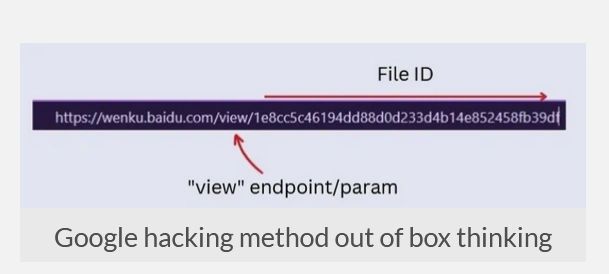
We've done interesting research on Baidu indexing files and documents marked confidential, using a manual "elimination method" to identify subdomains and services.
QCC.com (企查查) and Tianyancha.com (天眼查)
Business-registration directories, central to corporate OSINT, ownership tracking, and due diligence. Use them to tie individuals to companies, even shell firms. What you can extract:
- Legal representative and shareholders
- Email and phone numbers
- Registered addresses
- Court cases and financial info
We've shown — live — how to bypass QCC.com and Tianyancha, which often block access using DPI or geo-restrictions that make simple VPNs useless. In the course we teach at least four unique access methods (with more in development), several adapted directly from advanced penetration-testing practices.
Baidu Maps and Dianping (大众点评)
Maps and review platforms, useful for location intel and business validation — good for confirming fake businesses or validating operations. What you can extract:
- Phone numbers
- Physical addresses
- Business hours and photos
How to extract emails, phones, and usernames
Chinese emails
Look for @qq.com, @163.com, @126.com, @sina.com, @sohu.com, and @aliyun.com — often tied to WeChat or business accounts. Dorking works well, for example: "@qq.com" site:zhihu.com
Phone numbers
All begin with +86. Mobile numbers often start with 13x, 15x, 17x, 18x, or 19x (for example +86 138-xxxx-xxxx). Landlines start with a city code — 010 (Beijing), 021 (Shanghai), 0755 (Shenzhen). Look for them in bios, contact pages, and database dumps.
Usernames
Track common usernames across Weibo, Zhihu, RedNote, and Tieba, using reverse-username lookup tools or search engines.
Tools and tactics
- Use Chinese dorking with Baidu and Sogou
- Try reverse image search in Chinese engines
- Use scrapers carefully — platforms block bots
- Use tools like Maltego or OSINT Industries to visualize and map relationships
Why this matters now
Doing OSINT without including China is like solving a puzzle with half the pieces. From company ownership to cyber threat actors, much of the world's activity touches China's digital space. If you know where to look and how to search, you can gather real, actionable intelligence from these platforms. It takes a different mindset, different tools, and a new set of techniques — but the payoff is maximum coverage and visibility into this closed ecosystem.
Chinese cloud storage in particular is a goldmine for those who understand how misconfigurations happen and how data is structured. Sometimes a simple tweak in a URL, or a glance at a bucket's naming convention, can unlock entire collections of files that were never meant to be public. The key isn't just knowing where to search — it's knowing what others overlook.
Ready to learn more advanced techniques? Read the full course information across our training programs.